Every day, we make decisions. Some are small, like how we spend our morning. Others can change the direction of our careers, relationships, businesses, and lives.
Yet making the right choice is not always easy.
We overthink possibilities, worry about making mistakes, seek approval from others, and sometimes delay decisions because we are afraid of the outcome. In the process, we can spend so much time thinking about our options that we forget to move forward.
Better decision making is not about making perfect choices every time. It is about understanding what matters, evaluating your options, and choosing with greater awareness.
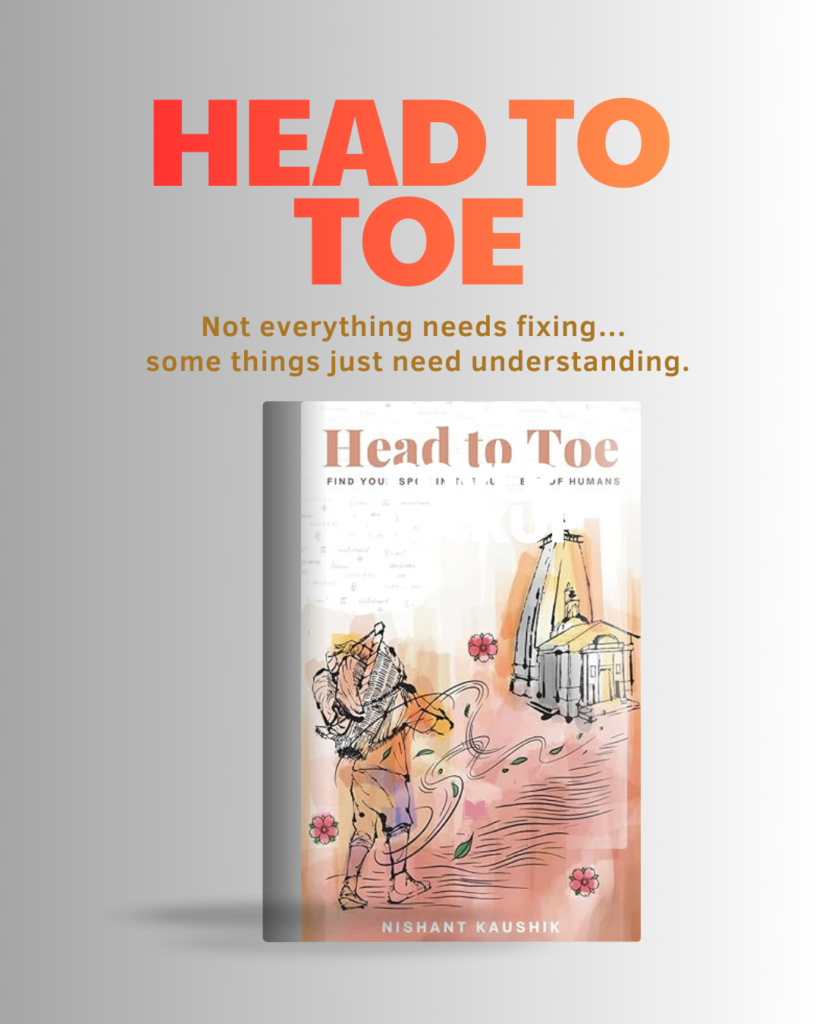
In Head to Toe: Find Your Spot in the Business of Humans, Nishant Kaushik explores a human-centred perspective on life and business. This perspective offers a useful reminder: our decisions affect not only our own lives but also the people around us.
So, how can we make better decisions, overcome confusion, and build a life that reflects our values?
Let’s explore.
1. Why Decision Making Matters
Our lives are shaped by the choices we make repeatedly.
The habits we develop, the people we trust, the opportunities we pursue, and the way we respond to challenges all influence our direction.
A single decision may not transform everything overnight. However, small decisions made consistently can influence our long-term outcomes.
Consider a few everyday examples:
- Choosing to learn a new skill can open opportunities for professional growth.
- Choosing to listen before reacting can strengthen relationships.
- Choosing to address a problem early can prevent it from becoming more complicated.
- Choosing to spend time intentionally can help you focus on what matters most.
Better decision making helps us move beyond automatic reactions and make choices that align with our priorities.
It also helps us accept an important truth: we cannot control every outcome, but we can improve the way we approach our choices.

2. Why Do We Struggle to Make Decisions?
If decisions are part of everyday life, why do they sometimes feel so difficult?
Several common challenges can get in the way.
Overthinking every possibility
Thinking carefully is useful, but repeatedly analysing the same options can leave us feeling stuck.
We imagine every possible outcome, search for complete certainty, and postpone action until we feel absolutely confident.
Unfortunately, certainty is not always available.
Fear of making the wrong choice
Fear of failure can make even simple decisions feel overwhelming. We may avoid opportunities because we cannot guarantee success.
But avoiding a decision is also a choice, and it can have consequences of its own.
Seeking everyone’s approval
Advice from others can be valuable. However, when we depend entirely on external approval, we may lose sight of our own priorities.
Different people have different experiences, values, and expectations. Their preferred choice may not be the right choice for our circumstances.
Emotional reactions
Anger, anxiety, excitement, and disappointment can influence how we interpret situations.
Making an important decision while emotionally overwhelmed may cause us to focus on immediate relief rather than long-term consequences.
Too much information
Having more information can improve a decision, but gathering information without a clear purpose can create confusion.
The goal is to collect the information that matters, not to investigate every imaginable possibility.
Recognising these challenges is the first step towards making decisions with greater clarity.

3. Understand Your Values Before Making a Choice
One of the most useful ways to improve decision making is to understand what matters most to you.
Without clear priorities, every option can seem equally attractive or equally risky.
For example, imagine choosing between two job opportunities. One offers a higher salary, while the other provides more opportunities to learn and a schedule that better supports your personal commitments.
There is no universal answer. The right choice depends on your circumstances, responsibilities, and priorities.
Ask yourself:
- What matters most to me at this stage of life?
- What am I trying to achieve?
- Which option aligns with my values?
- What am I willing to compromise on?
- How might this decision affect the people around me?
When you understand your priorities, you have a clearer framework for evaluating your options.
Clarity begins when you know what you are choosing for—not just what you are choosing between.

4. A Step-by-Step Guide to Better Decision Making
You do not need a complicated system to make better choices. A simple process can help you slow down, examine your options, and take action.
Step 1: Define the actual problem
Before looking for a solution, make sure you understand the problem.
Sometimes, we respond to the visible symptom without addressing the underlying issue.
Write down what you need to decide and why the decision matters.
Step 2: Separate facts from assumptions
Identify what you know, what you believe, and what you still need to find out.
For example, assuming that a new opportunity will fail is different from having evidence that it carries significant risks.
Separating facts from assumptions can help you evaluate a situation more objectively.
Step 3: Identify realistic options
Avoid thinking in terms of only two extreme choices.
You may be able to negotiate, test an idea on a smaller scale, delay a decision until a specific piece of information becomes available, or combine elements of different options.
Look for alternatives that address the real problem.
Step 4: Consider the consequences
Evaluate the advantages, disadvantages, risks, and likely outcomes of each option.
Think about both short-term and long-term effects.
Consider how the decision might affect your finances, well-being, relationships, responsibilities, and future opportunities.
Step 5: Seek relevant advice
Speak with people who have experience or knowledge relevant to the decision.
Ask questions that help you understand the situation rather than simply asking someone else to choose for you.
Advice should improve your understanding, not replace your judgement.
Step 6: Make the decision and take action
Once you have enough information to make a reasonable choice, decide on the next step.
Not every decision needs endless analysis. For many everyday choices, a thoughtful and timely decision is more useful than waiting indefinitely for certainty.
Step 7: Learn from the outcome
After acting, review what happened.
What worked? What did you overlook? What would you do differently next time?
Treat the outcome as an opportunity to learn rather than judging the entire decision only by whether things went perfectly.
A good decision can still produce an unexpected result. What matters is whether you made a reasonable choice based on the information available at the time.

5. The Role of Emotions in Decision Making
Good decision making does not require eliminating emotions.
Emotions can provide useful information about our needs, concerns, boundaries, and priorities. The challenge is understanding them without allowing a temporary reaction to determine every action.
When you feel angry, pause before sending a message.
When you feel anxious, identify the specific risk that concerns you.
When you feel excited about an opportunity, examine the practical details as well as the possibilities.
When you feel disappointed, give yourself time to process the experience before making a major decision.
A helpful question is:
Am I choosing this because it aligns with what matters to me, or because I want to escape an uncomfortable feeling right now?
You may not always have the luxury of waiting, especially in urgent situations. But when time permits, a pause can help you respond more thoughtfully.

6. How Self-Awareness Leads to Better Choices
Self-awareness means recognising your values, emotions, habits, strengths, limitations, and recurring patterns.
Without self-awareness, we may repeatedly make choices based on assumptions we have never questioned.
Perhaps you avoid opportunities because you fear criticism. Perhaps you say yes to every request because you want to please people. Perhaps you pursue goals because others expect them from you.
Recognising these patterns gives you an opportunity to decide whether they still serve you.
Try reflecting on these questions:
- Which situations repeatedly make me uncomfortable?
- What kinds of decisions do I tend to postpone?
- Do I rely too heavily on other people’s opinions?
- Which personal values influence my choices?
- What have my past decisions taught me about myself?
You do not need to have every answer immediately. The aim is to become more conscious of the patterns influencing your decisions.
The better you understand yourself, the easier it becomes to recognise which choices genuinely align with your goals and values.
7. Why Understanding People Improves Decisions
Decisions rarely exist in isolation. They affect colleagues, family members, customers, friends, and communities.
This is particularly important in business and leadership, where a decision can influence a team’s morale, a customer’s experience, or a working relationship.
In Head to Toe: Find Your Spot in the Business of Humans, Nishant Kaushik explores the importance of understanding people and recognising the human dimension of business.
This perspective can also inform everyday decision making.
Before making a decision that affects someone else, consider:
- Have I understood their needs and concerns?
- Am I making assumptions about their intentions?
- Have I listened to the people affected by this choice?
- Is my decision fair and respectful?
- What might the longer-term impact be on trust?
Understanding people does not mean agreeing with everyone or avoiding difficult decisions. It means taking the time to consider the human consequences alongside practical objectives.
When we combine clear thinking with empathy, we can make choices that are more informed, responsible, and considerate.

8. Practical Habits That Strengthen Decision Making
Better decisions become easier when you develop habits that support clear thinking.
Set clear priorities. Know which goals matter most before deciding where to invest your time and energy.
Use a simple pros-and-cons list. Writing down the benefits and risks can make complicated choices easier to compare.
Set a decision deadline. For decisions that do not require extensive research, give yourself a reasonable time to evaluate the options and move forward.
Limit unnecessary information. Focus on reliable, relevant facts rather than endlessly searching for more opinions.
Learn from experience. Review past choices to understand what helped and what you could improve.
Ask for feedback. Invite constructive perspectives from people with relevant experience, especially when the decision has significant consequences.
Accept that uncertainty is part of life. You can make a careful decision without knowing exactly how everything will unfold.
These habits do not guarantee perfect outcomes. They can, however, help you approach decisions with more structure, confidence, and awareness.

9. Better Decisions, Better Life: Start With One Choice
It is easy to believe that a better life requires one major breakthrough.
Sometimes, however, progress begins with a smaller decision.
You choose to have an honest conversation instead of avoiding it.
You choose to learn rather than remain comfortable.
You choose to listen before responding.
You choose to reconsider a goal that no longer reflects your priorities.
You choose to take one practical step instead of waiting for the perfect moment.
Over time, these choices can influence the direction of your life.
The objective is not to control everything. It is to become more intentional about the things you can influence.

Frequently Asked Questions About Better Decision Making
How can I improve my decision-making skills?
Start by defining the problem, clarifying your priorities, gathering relevant information, comparing realistic options, and considering the consequences. After acting, review the outcome and learn from the experience.
How do I stop overthinking decisions?
Write down the actual decision, identify the information you still need, and set a reasonable deadline. Recognise that more analysis does not always produce more certainty. For high-impact decisions, allow sufficient time for research and expert advice.
Why is self-awareness important in decision making?
Self-awareness helps you recognise the values, emotions, assumptions, and habits that influence your choices. This understanding can help you make decisions that better align with your priorities.
Should I follow logic or intuition when making decisions?
Both can be useful. Logic helps you evaluate evidence and consequences, while intuition may reflect experience and pattern recognition. For important decisions, combine reflection and relevant evidence with an awareness of your instincts.
How does understanding people improve business decisions?
Understanding people’s needs, perspectives, and concerns can help leaders and professionals evaluate the human impact of their choices, communicate more effectively, and build stronger working relationships.
How is Head to Toe related to better decision making?
Head to Toe: Find Your Spot in the Business of Humans by Nishant Kaushik offers a human-centred perspective on understanding people and creating value. These ideas can encourage readers to consider both their own priorities and the effects their choices have on others.
Final Thoughts: Choose With Clarity. Live With Purpose.
Every decision takes you somewhere.
Some choices open new possibilities. Others teach you important lessons. Some lead to outcomes you expected, while others reveal things you could not have predicted.
You cannot guarantee that every decision will be right. But you can improve the way you approach your choices by understanding your values, examining the available information, considering the people affected, and learning from experience.
Better decision making is not about removing every doubt. It is about becoming more thoughtful, self-aware, and intentional.
As you move forward, remember that your decisions are not only about reaching a destination. They also shape the person you become along the way.
Choose with clarity. Choose with purpose. Build a life that reflects what truly matters.
Discover Head to Toe: Find Your Spot in the Business of Humans
Want to explore a more human-centred perspective on life, work, relationships, and creating value?
Discover Head to Toe: Find Your Spot in the Business of Humans by Nishant Kaushik.